Introduction
Hospitals operate in one of the most complex environments, where every department contributes to patient care, operational efficiency, and overall service quality. While clinical teams focus on diagnosis and treatment, food services play a vital supporting role by providing safe, nutritious, and timely meals to patients, healthcare professionals, and visitors.
As healthcare demands continue to evolve, many hospitals are reevaluating how their food services are managed. One of the most important operational decisions involves choosing between maintaining an in-house food service department or partnering with an experienced outsourced food service provider.
Both approaches have their advantages depending on an organization’s size, operational goals, available resources, and long-term strategy. Understanding these differences allows healthcare leaders to make informed decisions that balance quality, efficiency, financial sustainability, and patient satisfaction.
According to the World Health Organization (WHO), safe and nutritious food remains an essential component of quality healthcare, supporting patient recovery and overall health outcomes. Likewise, effective food service operations contribute to smoother hospital workflows while helping healthcare organizations maintain high standards of care.
Understanding the Two Food Service Models
Before comparing both approaches, it is important to understand how each model operates within a healthcare environment.
| In-House Food Services | Outsourced Food Services |
|---|---|
| The hospital directly manages its own kitchen operations, culinary staff, purchasing, menu planning, food production, equipment maintenance, and quality assurance. | A professional food service company manages all or part of the hospital’s food operations under agreed service standards while working closely with hospital administrators and nutrition teams. |
Neither model is universally better. The right solution depends on the healthcare facility’s operational priorities, staffing capabilities, budget, infrastructure, and long-term objectives.
Comparing In-House and Outsourced Hospital Food Services
Hospital administrators typically evaluate several operational factors before deciding which food service model best supports their organization.
| Evaluation Factor | In-House Management | Outsourced Food Services |
|---|---|---|
| Staff Recruitment | Hospital recruits, trains, and supervises culinary personnel. | Provider supplies experienced food service professionals. |
| Food Production | Managed entirely by hospital operations. | Supported by standardized production systems and culinary expertise. |
| Equipment Management | Hospital oversees maintenance and replacement planning. | Responsibilities vary depending on the service agreement. |
| Menu Development | Prepared internally with hospital dietitians. | Developed collaboratively with clinical nutrition teams. |
| Operational Flexibility | Dependent on internal staffing and available resources. | Often supported by scalable production and operational processes. |
| Continuous Improvement | Managed internally based on available expertise. | Professional providers typically introduce operational best practices and ongoing service enhancements. |
Benefits of Keeping Food Services In-House
Many healthcare organizations continue operating internal food service departments because they prefer maintaining direct oversight of daily operations. Depending on the hospital’s structure and available resources, this approach can provide several advantages.
Potential Advantages
- Greater day-to-day operational control.
- Direct supervision of food service personnel.
- Immediate coordination between departments.
- Internal decision-making for menus and procurement.
- Established organizational familiarity.
However, hospitals operating internal food service departments also assume full responsibility for recruitment, workforce management, purchasing, equipment maintenance, compliance, production planning, quality assurance, and continuous operational improvements.
Benefits of Outsourcing Hospital Food Services
Many modern healthcare facilities partner with professional food service providers to strengthen operational efficiency while allowing clinical teams to focus on patient care. Outsourcing does not eliminate hospital oversight; instead, it enables healthcare organizations to collaborate with specialists who dedicate their expertise to institutional food operations.
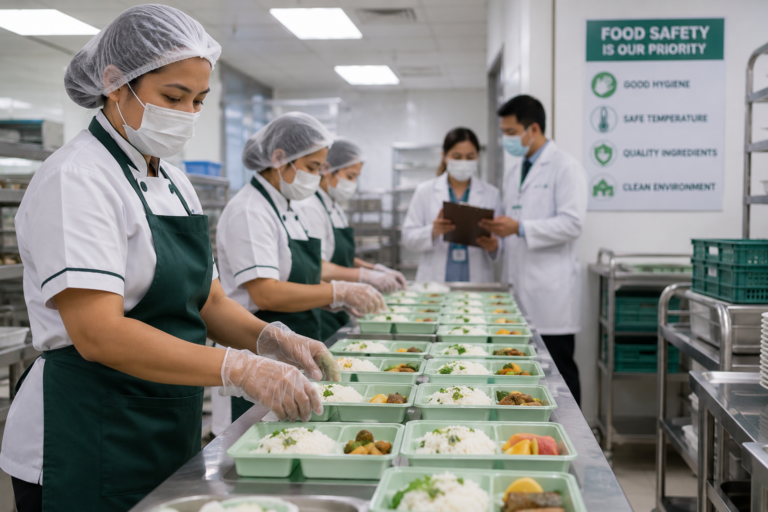
Professional food service providers often bring standardized production systems, experienced culinary teams, established food safety procedures, scalable operations, and continuous quality improvement processes that support healthcare environments.
Common Benefits
- Access to experienced institutional food service professionals.
- Improved operational efficiency.
- Scalable meal production.
- Standardized food safety procedures.
- Reduced administrative burden for hospital management.
- Consistent food quality.
- Long-term operational partnership.
Questions Hospital Decision Makers Should Ask Before Outsourcing
Selecting a food service partner is a strategic decision that affects patient experience, operational efficiency, regulatory compliance, and long-term service quality. Before entering into a partnership, healthcare organizations should evaluate providers based on more than cost alone.
Consider asking the following questions during the selection process:
- Does the provider have experience serving hospitals or institutional healthcare facilities?
- Can they support therapeutic and physician-prescribed meal programs?
- How do they maintain food safety and quality assurance throughout production and delivery?
- Can their operations scale as patient volumes fluctuate?
- What systems are in place for continuous quality improvement?
- How are dietary restrictions, allergens, and special nutritional requirements managed?
- Can they collaborate effectively with hospital administrators, dietitians, and clinical teams?
- What contingency plans exist for emergencies or unexpected operational disruptions?
These considerations help ensure that a food service partnership supports both clinical objectives and operational excellence.
When Does Outsourcing Make the Most Sense?
While every healthcare organization has unique operational requirements, outsourcing is often considered when hospitals seek to:
- Improve operational efficiency.
- Reduce administrative workload.
- Access experienced institutional culinary teams.
- Maintain consistent food quality across large meal volumes.
- Strengthen food safety and quality assurance processes.
- Expand meal production capacity without significantly increasing internal staffing.
- Allow healthcare professionals to focus more on patient care.
For many hospitals, partnering with an experienced institutional food service provider becomes an extension of their healthcare operations rather than simply an outsourced vendor relationship.
The Importance of Collaboration Between Hospitals and Food Service Providers
Successful healthcare food service partnerships rely on collaboration. Hospital administrators, physicians, dietitians, nursing teams, and food service professionals each contribute to delivering meals that support patient recovery and operational efficiency.
Regular performance reviews, menu evaluations, patient feedback, nutritional assessments, and quality monitoring help ensure food services continue meeting the hospital’s evolving needs.
This collaborative approach creates a dining experience that supports not only nutritional requirements but also patient comfort, employee satisfaction, and institutional excellence.
How ISLA Gourmet Foods Supports Healthcare Food Service Operations
ISLA Gourmet Foods Corporation partners with organizations requiring dependable institutional food services through customized operational solutions built around consistency, food safety, efficiency, and culinary excellence.
Our capabilities include cafeteria management, packaged meal solutions, commercial food supply, and corporate catering services, allowing organizations to implement food service programs tailored to their operational requirements. Working closely with clients, we help develop solutions that prioritize quality, nutrition, and dependable service delivery.
Whether supporting healthcare facilities, corporate campuses, manufacturing plants, or government institutions, our objective is to create dining programs that combine operational reliability with exceptional food experiences.
Final Thoughts
There is no universal answer to whether hospitals should manage food services internally or outsource them. The right approach depends on each organization’s operational goals, available resources, staffing strategy, and long-term vision.
Hospitals that maintain strong internal capabilities may continue benefiting from in-house operations. Others may discover that partnering with an experienced institutional food service provider improves efficiency, consistency, and overall service quality while allowing healthcare professionals to remain focused on what matters most: delivering outstanding patient care.
Regardless of the chosen model, successful hospital food services are built on safe food handling, balanced nutrition, operational excellence, continuous improvement, and a commitment to enhancing the healthcare experience for every patient, employee, and visitor.
Looking for a Reliable Healthcare Food Service Partner?
ISLA Gourmet Foods Corporation delivers professional food service solutions for healthcare facilities, corporate organizations, educational institutions, manufacturing companies, and government agencies throughout the Philippines. Our customized programs are designed to support operational efficiency, food safety, and exceptional dining experiences.
Contact our team today to discuss how we can help develop a food service solution tailored to your organization’s unique requirements.
Frequently Asked Questions
Is it better for hospitals to outsource food services?
There is no one-size-fits-all answer. The right approach depends on a hospital’s operational goals, available resources, staffing capabilities, infrastructure, and long-term strategy. Many healthcare facilities choose to outsource food services to improve efficiency, strengthen food safety practices, and deliver consistent meal quality while allowing healthcare professionals to focus more on patient care.
What are the benefits of outsourced hospital food services?
Outsourced hospital food services offer several advantages, including access to experienced culinary professionals, standardized food safety systems, scalable meal production, operational efficiency, and consistent food quality. They also reduce the administrative burden of managing kitchen staff, procurement, and day-to-day food service operations.
How do hospitals choose a food service provider?
Hospitals should evaluate food service providers based on their healthcare industry experience, food safety programs, therapeutic meal capabilities, production capacity, quality assurance processes, delivery reliability, and ability to work closely with hospital administrators, dietitians, and clinical nutrition teams. A provider should also demonstrate flexibility in meeting the unique needs of each healthcare facility.
Can outsourced providers prepare therapeutic diets?
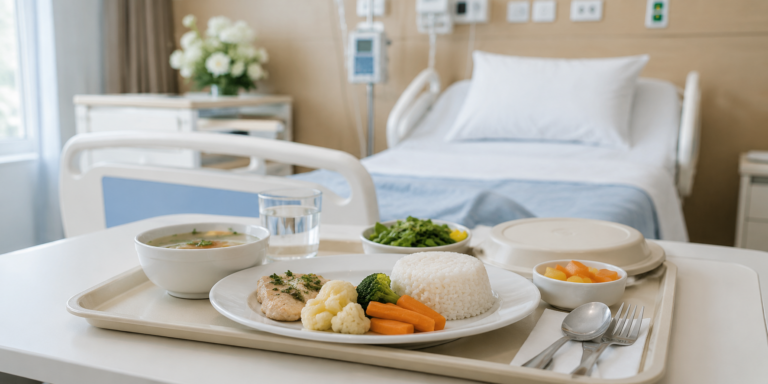
Yes. Professional healthcare food service providers are capable of preparing therapeutic meals that meet physician-prescribed dietary requirements. These may include diabetic, cardiac, renal, low-sodium, soft, pureed, liquid, and other medically prescribed diets, all prepared according to established nutrition and food safety standards.
What food safety standards should hospital food service providers follow?
Hospital food service providers should implement comprehensive food safety practices that include proper food handling, personal hygiene, temperature monitoring, sanitation procedures, quality inspections, allergen management, and compliance with recognized food safety regulations. Consistent monitoring helps ensure meals remain safe and suitable for patient consumption.
Does outsourcing reduce hospital operating costs?
Outsourcing can help hospitals optimize operational costs by improving production efficiency, reducing staffing and administrative responsibilities, and leveraging the expertise and established systems of experienced institutional food service providers. However, the overall financial impact depends on each hospital’s size, operational requirements, and service expectations.
Can outsourced food services support hospital cafeterias?
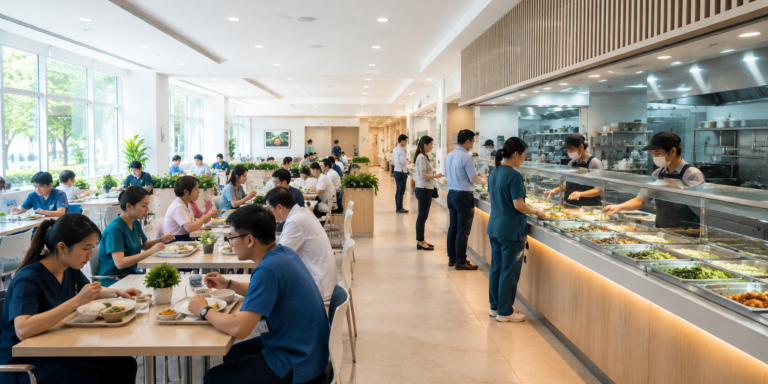
Absolutely. Many institutional food service providers manage hospital cafeterias, employee dining facilities, visitor food outlets, and patient meal services. They can develop customized menus, oversee daily kitchen operations, maintain food safety standards, and deliver a consistent dining experience for patients, staff, and visitors alike.
What should be included in a hospital food service contract?
A comprehensive hospital food service agreement should clearly define the scope of services, menu planning responsibilities, therapeutic meal requirements, food safety standards, staffing obligations, delivery schedules, quality assurance measures, reporting procedures, key performance indicators (KPIs), and continuous improvement processes. Clearly established expectations help foster a successful long-term partnership.
How can hospitals improve patient satisfaction through food services?
Hospitals can improve patient satisfaction by serving nutritious, well-balanced meals that are flavorful, visually appealing, and delivered on time. Providing menu variety, accommodating dietary restrictions, maintaining high food quality, and ensuring consistent service all contribute to a more positive patient dining experience and overall healthcare journey.
Why do healthcare facilities partner with institutional food service providers?
Healthcare facilities often partner with institutional food service providers to improve operational efficiency, strengthen food safety compliance, access experienced culinary professionals, and deliver consistent, high-quality meal services. By outsourcing food operations to specialists, hospitals can dedicate more time and resources to their primary mission of delivering exceptional patient care.