Introduction
Healthcare facilities operate in one of the most demanding environments, where every service contributes to patient safety, operational efficiency, and overall quality of care. While clinical excellence remains the primary focus, food services play an equally important role in supporting patient recovery, employee wellness, and the daily operations of hospitals.
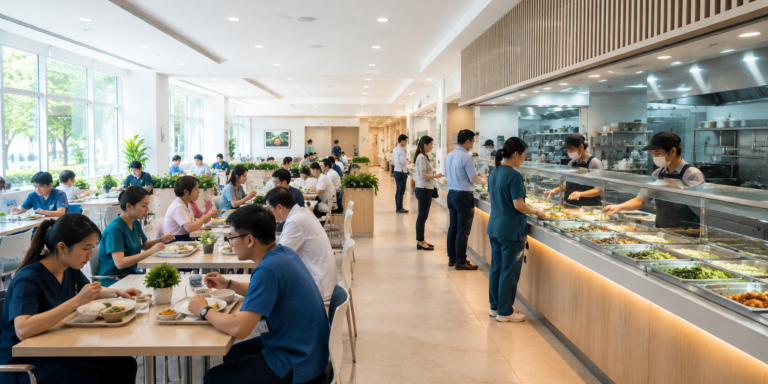
Modern hospitals no longer view food services as simply preparing and serving meals. Instead, they recognize it as an integrated operational function that requires nutrition management, food safety compliance, production efficiency, logistics coordination, and exceptional service quality. From therapeutic diets for in-patients to employee cafeterias and visitor dining facilities, every meal contributes to the overall healthcare experience.
Organizations such as the World Health Organization (WHO) and the Food and Agriculture Organization (FAO) continue to emphasize the importance of safe, nutritious, and accessible food systems in promoting better health outcomes and sustainable healthcare operations.
In the Philippines, both private and public healthcare institutions are continuously improving their food service operations to meet rising patient expectations, evolving nutritional standards, and increasing operational demands. As hospitals expand their services, many are also evaluating how professional food service providers can help improve efficiency while maintaining the highest standards of food quality and safety.
What Are Hospital Food Services?
Hospital food services encompass the planning, preparation, production, distribution, and management of meals within healthcare facilities. Unlike traditional catering, hospital food services require close coordination between culinary professionals, registered dietitians, nutritionists, healthcare administrators, and food safety teams to ensure every meal supports both operational objectives and patient well-being.
A comprehensive hospital food service program may include:
| Service Area | Description |
|---|---|
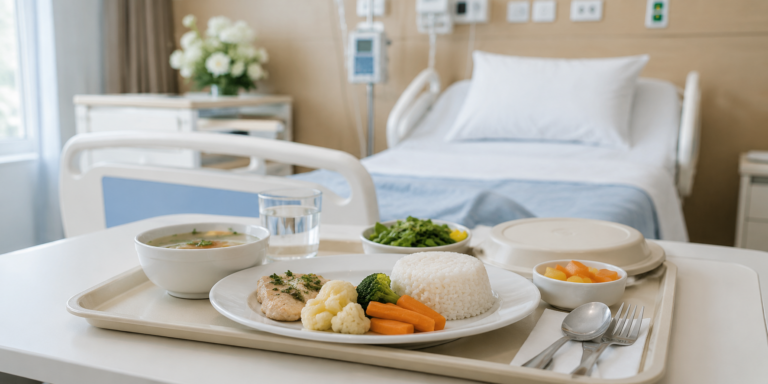
| Patient Meal Services | Preparation of nutritionally balanced meals tailored to medical conditions and physician-prescribed diets. |
| Therapeutic (RX) Meals | Specialized meal plans designed for patients with diabetes, renal disease, cardiac conditions, gastrointestinal disorders, and other clinical requirements. |
| Employee Cafeterias | Daily meal services that support healthcare professionals, administrative staff, and hospital employees. |
| Visitor Dining | Cafeterias and concessionaire operations serving patients’ families, guests, and visitors. |
| Bulk Meal Production | Large-scale commissary production capable of serving hundreds or thousands of meals every day. |
| Food Supply & Procurement | Reliable sourcing of ingredients, inventory management, and continuous food supply to maintain uninterrupted operations. |
Together, these services help hospitals maintain operational continuity while ensuring that patients, healthcare professionals, and visitors receive safe, nutritious, and consistently prepared meals every day.
Why Hospital Food Services Matter More Than Ever
The role of food within healthcare has evolved significantly over the past decade. Hospitals are increasingly expected to deliver not only excellent clinical care but also a positive patient experience, improved nutritional outcomes, and efficient operational management. Food services now contribute directly to these objectives.
Key Factors Driving Modern Hospital Food Services
- Growing focus on patient-centered healthcare.
- Increasing demand for therapeutic and medically prescribed diets.
- Higher expectations for food safety and infection prevention.
- Rising operational costs and staffing challenges.
- Need for scalable meal production across multiple facilities.
- Improved employee wellness through quality workplace dining.
- Greater emphasis on sustainability and food waste reduction.
Research published by the National Center for Biotechnology Information (NCBI) has shown that hospital nutrition is closely associated with patient recovery, reduced complications, and overall clinical outcomes. Proper meal planning supports healing while improving patient satisfaction throughout hospitalization.
Essential Components of Modern Hospital Food Services
Leading healthcare facilities no longer evaluate food providers solely on menu quality. Instead, they assess a broad range of operational capabilities that ensure consistency, regulatory compliance, and long-term service reliability.
| Component | Why It Matters |
|---|---|
| Food Safety | Protects vulnerable patients through strict hygiene, sanitation, and temperature control procedures. |
| Clinical Nutrition | Supports physician-prescribed diets and improves patient recovery. |
| Operational Efficiency | Ensures timely meal preparation and distribution across departments. |
| Scalable Production | Supports hospitals experiencing fluctuating patient census and staffing requirements. |
| Quality Assurance | Maintains consistency across every meal through standardized production systems. |
| Professional Food Service Management | Allows healthcare providers to focus on patient care while specialists manage food operations. |
These operational capabilities distinguish modern healthcare food services from conventional catering operations and have become key considerations for hospitals evaluating long-term food service partners.
What Leading Hospitals Look for in a Food Service Partner
Selecting a hospital food service provider involves far more than comparing menus or pricing. Healthcare institutions require partners capable of supporting patient care, operational continuity, regulatory compliance, and long-term service excellence. Procurement teams, nutrition departments, and hospital administrators typically evaluate providers based on several critical factors before entering into a partnership.
Below are some of the most important qualities modern healthcare facilities should consider when evaluating a professional food service provider.
1. Proven Food Safety & Quality Assurance Systems
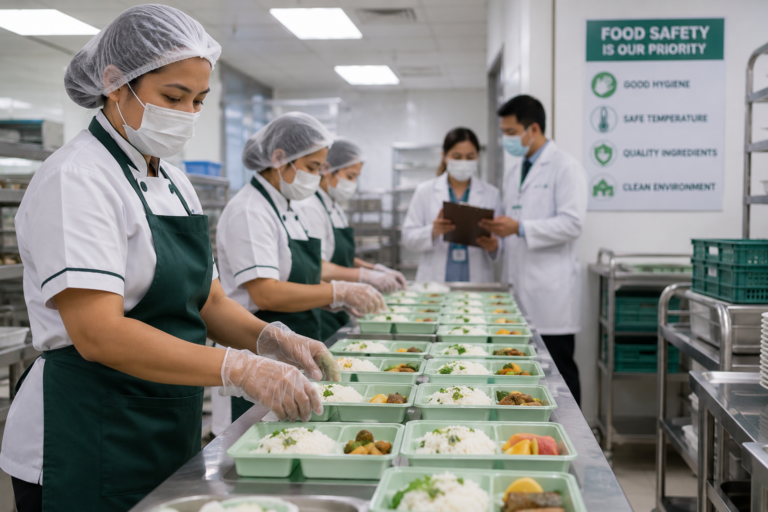
Hospitals care for individuals with varying health conditions, making food safety one of the most critical aspects of any food service operation. Providers should maintain rigorous food safety procedures throughout sourcing, preparation, storage, transportation, and meal distribution.
Leading food service partners implement standardized quality assurance systems, sanitation protocols, temperature monitoring, traceability procedures, and continuous staff training to minimize food safety risks while ensuring every meal is prepared consistently.
Best Practice
Healthcare facilities should evaluate whether a provider follows internationally recognized food safety practices such as HACCP principles, proper sanitation procedures, and continuous quality monitoring throughout the production process.
2. Clinical Nutrition & Therapeutic Meal Capability
Hospital food services extend beyond preparing appetizing meals. Many patients require physician-prescribed therapeutic diets that support recovery while addressing specific medical conditions. These meal programs often require close coordination between dietitians, nutritionists, physicians, and culinary professionals.
An experienced food service provider should be capable of supporting customized meal plans for various nutritional requirements while maintaining consistency, portion accuracy, and meal quality across every service period.
| Common Therapeutic Diet | Purpose |
|---|---|
| Diabetic Diet | Supports healthy blood glucose management. |
| Cardiac Diet | Helps reduce sodium, saturated fats, and cholesterol intake. |
| Renal Diet | Manages kidney-related nutritional requirements. |
| Soft Diet | Designed for patients with swallowing or digestive challenges. |
| Liquid Diet | Supports post-operative recovery and digestive care. |
According to the Academy of Nutrition and Dietetics, medical nutrition therapy plays an essential role in improving patient outcomes while supporting overall healthcare quality.
3. Scalable Meal Production & Operational Capacity
Hospital meal demand can fluctuate significantly depending on patient admissions, staffing levels, seasonal illnesses, and emergency situations. Healthcare organizations therefore require food service partners capable of scaling production efficiently without compromising food quality or delivery schedules.
Providers with centralized commissary operations, standardized production systems, and experienced culinary teams are generally better equipped to support both routine daily operations and periods of increased demand.
Operational Advantage
Scalable production systems allow hospitals to respond more effectively to unexpected patient volume increases while maintaining consistent food quality and operational efficiency.
4. Reliable Delivery & Supply Chain Management
Timely meal delivery is essential in healthcare environments where patients receive meals according to physician schedules, medication timing, and clinical care plans. Delayed or inconsistent food distribution can negatively affect both operational efficiency and patient experience.
Professional food service providers should maintain dependable logistics systems, delivery coordination, contingency planning, and inventory management practices to ensure uninterrupted meal availability throughout hospital operations.
5. Experience Serving Institutional Clients
Healthcare food services differ significantly from traditional catering or restaurant operations. Providers with experience serving hospitals, educational institutions, manufacturing facilities, and other large organizations often possess stronger operational processes, standardized workflows, and greater familiarity with institutional dining requirements.
Experience in managing large-scale food production, multiple service schedules, and diverse dietary requirements allows providers to adapt more effectively to the complex operational environment of modern healthcare facilities.
6. Flexibility & Long-Term Partnership
Healthcare operations continue to evolve as patient expectations, nutritional standards, and service requirements change over time. Rather than acting solely as meal providers, the most successful food service companies become long-term operational partners that continuously improve menus, optimize workflows, and adapt to changing healthcare needs.
Strong communication, regular performance reviews, continuous quality improvement, and collaborative planning help create partnerships that support both patient care and hospital operational excellence.
Key Takeaway
Choosing the right hospital food service partner involves much more than evaluating food quality alone. Healthcare facilities should consider food safety systems, therapeutic meal capabilities, production capacity, operational reliability, nutritional expertise, and long-term service support to ensure every meal contributes to a safer, more efficient healthcare environment.
Frequently Asked Questions
1. What are hospital food services?
Hospital food services involve the planning, preparation, production, and delivery of meals for patients, healthcare professionals, visitors, and staff. These services also include therapeutic diets, cafeteria management, food safety compliance, and nutrition-focused meal programs designed to support both patient care and daily hospital operations.
2. Why are hospital food services important?
Hospital food services play a vital role in improving patient recovery, employee wellness, operational efficiency, and overall patient satisfaction. Safe, nutritious, and consistently prepared meals help support clinical outcomes while contributing to a positive healthcare experience for patients, staff, and visitors.
3. What should hospitals look for in a food service partner?
Healthcare facilities should evaluate food service providers based on their food safety systems, therapeutic meal capabilities, production capacity, quality assurance processes, operational reliability, logistics support, and experience serving hospitals and other institutional clients.
4. Can hospital food service providers prepare therapeutic or RX meals?
Yes. Professional healthcare food service providers can prepare physician-prescribed therapeutic meals such as diabetic, renal, cardiac, soft, and liquid diets. These meal programs are carefully developed to support clinical nutrition requirements while maintaining food quality and patient satisfaction.
5. Should hospitals outsource their food services?
The decision depends on each hospital’s operational goals, staffing capacity, and available resources. Many healthcare facilities choose to outsource food services to improve operational efficiency, strengthen food safety compliance, access specialized expertise, and optimize long-term costs while maintaining consistent meal quality.
6. How do food service providers maintain food safety in hospitals?
Professional food service providers implement standardized food preparation procedures, temperature monitoring, sanitation protocols, quality inspections, staff training, and strict hygiene practices throughout the production and delivery process. These measures help ensure meals remain safe, fresh, and consistently prepared.
7. Can hospitals customize patient meal programs?
Absolutely. Patient meal programs can be customized based on physician prescriptions, medical conditions, dietary restrictions, nutritional requirements, cultural preferences, and recovery plans. Customized meal planning helps support better patient outcomes while enhancing the overall dining experience.
8. What industries besides hospitals benefit from institutional food services?
Institutional food services also support corporate offices, manufacturing facilities, educational institutions, government agencies, logistics operations, industrial sites, and other organizations requiring dependable, large-scale meal production and food service management.
9. How can healthcare facilities improve patient satisfaction through food services?
Healthcare facilities can enhance patient satisfaction by serving nutritious, well-balanced meals, maintaining high food safety standards, offering menu variety, ensuring timely meal delivery, and providing therapeutic diets that meet each patient’s clinical and nutritional needs.
10. How can hospitals contact ISLA Gourmet Foods Corporation for food service solutions?
Hospitals and healthcare facilities looking for professional food service solutions can contact ISLA Gourmet Foods Corporation to discuss cafeteria management, therapeutic meal programs, packaged meal solutions, commercial food supply, and customized healthcare dining services tailored to their operational requirements.